
Feamainn Orga – Seaweed & Climate Action
In that ark of early memories that I carry with me one is of biting into bunches of rubbery ribbons. Of the taste, all I recall is a slight saltiness. The texture and chewing experience left more of an impression. It was more akin to rubber band than potato crisp. But still eminently chewable. It did not exactly melt in the mouth. Rather, it sort of shredded. And then of course the colour. A ruddy purple, close to an early season blackberry. My adult self might say burgundy.

The gastronomic experience was just that – an experience rather than a mere pleasure. And the associations were all to do with happiness, for the burgundy ribbons were de rigeur for Northern Ireland seaside summer holidays in the 1970’s. There may have been bombs and riots in Belfast. But at least we had bags of dulse – a red algae seaweed, gathered on the foreshore of the County Antrim coast (think Giant’s Causeway and, to a later generation, Game of Thrones).
The dulse of 1970s childhood memories is palmaria palmata, the Irish duileasg. It is one of the red algae branch of seaweeds. Although we thought of it as a local speciality in County Antrim, it grows on the shores of nextdoor Counties Down and Donegal and much further afield. It occurs on the northern coasts of the Atlantic and Pacific oceans and so is used in Canada and Iceland.
It has been foraged and eaten for centuries in Ireland. What we knew as a quirky snack food has history as a condiment valued by the Irish saints and a famine food sought out by the starving.
In recent years there has been something of a dulse boom. I am little short of flabbergasted to see what a quick search on Amazon offers me. You can have a kilo of Irish “fresh dulse” delivered for £75. But packets of “dulse flakes” from Maine or dulse from Cornwall are also available. And the plant pharmacologists have been at work on dulse, producing their formulations. Accordingly, Amazon will send you a liquid dulse seafood supplement or dulse-based smoothie powders, some of them marketed with one-legged goddess yoga poses. And a notch or two above Amazon, I read that plenty of high-end restaurants around Ireland have brought back dulse as a secret ingredient. No doubt sixth century St. Columba, who swore by it, would approve.
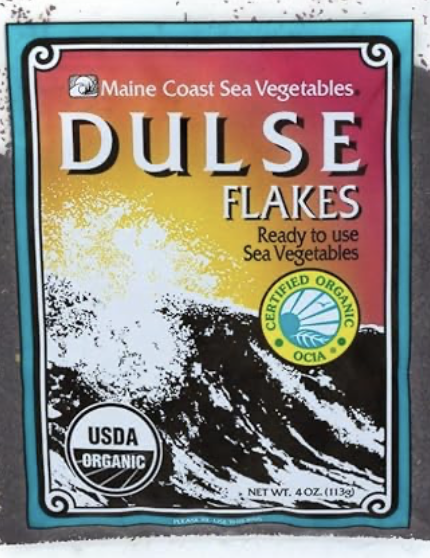
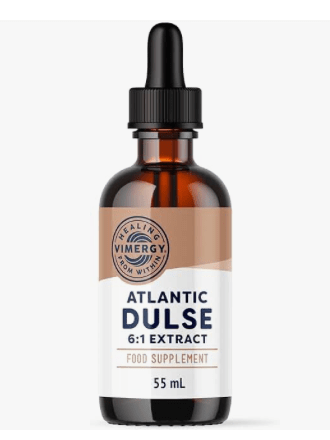
However, I am delighted to report that I recently took a first time visitor to the County Down coast. Despite the general gentrification of dulse, we found that the seaside shops still sell paper bags of dried bunches, matching my memories of fifty years ago. I could offer my guest a taste of childhood.
 Feamainn Orga - Seaweed and climate action